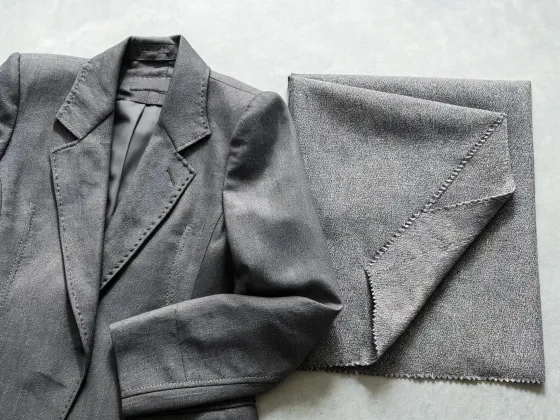
Structured jackets
Review drape, body, pressing response, seam behavior, surface recovery and compatibility with canvas or fusible systems.
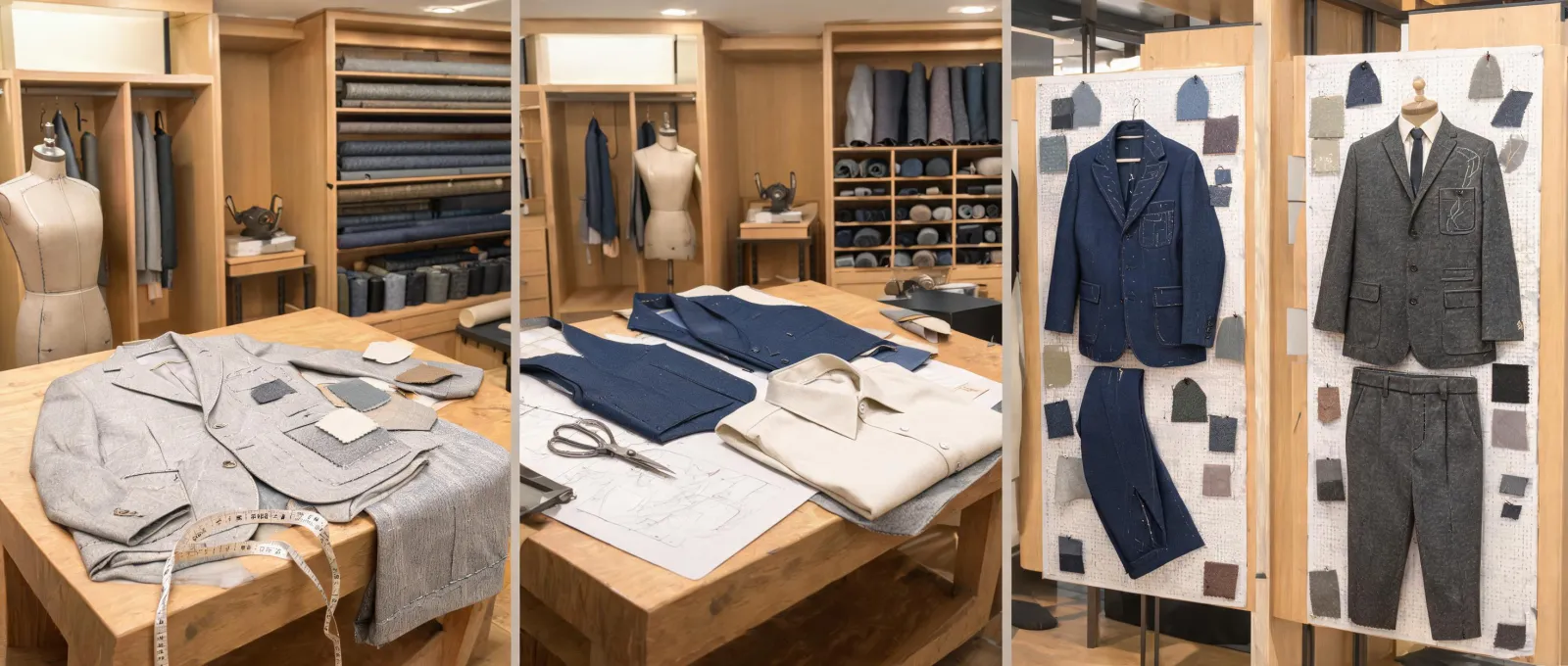
Compare cloth architecture against garment construction, movement, care and repeat-order needs.
Review drape, body, pressing response, seam behavior, surface recovery and compatibility with canvas or fusible systems.
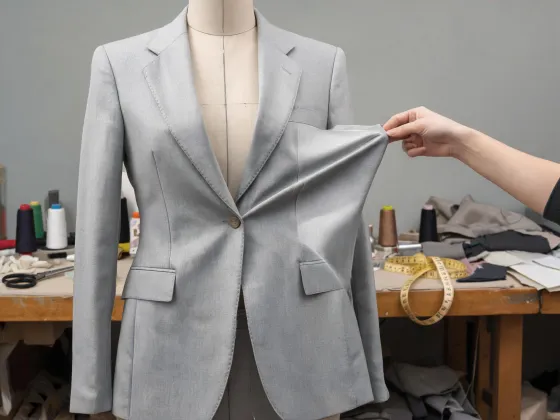
Define recovery, pilling, abrasion, colorfastness and care conditions without treating “wrinkle resistant” as a method.
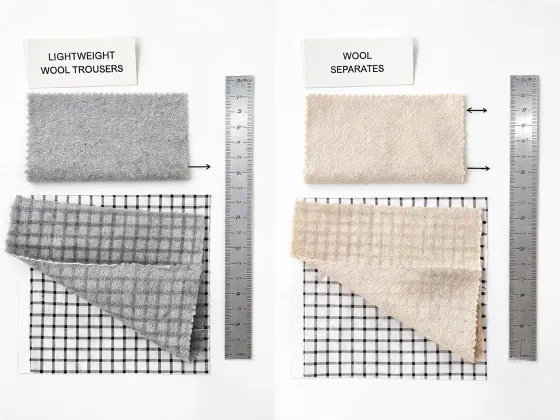
Lower GSM can affect opacity, stability, cutting, seam impression and hang; prototype evaluation is part of selection.
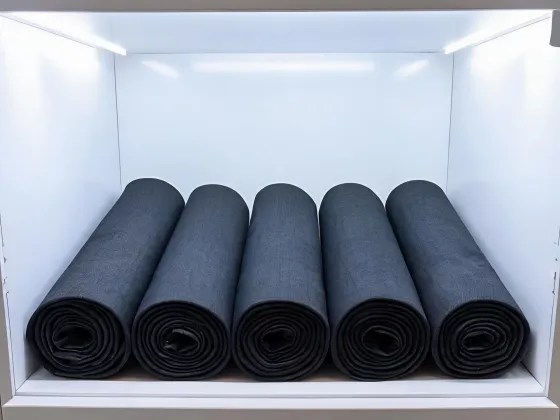
Repeat orders require construction identity, shade reference, usable width, care tests and defined lot tolerances.
Virgin fiber may offer specific length, fineness and consistency options. Recycled routes can address feedstock recovery objectives but require evidence for composition, traceability and the processing needed to reach the target yarn. Neither label alone establishes garment durability or total impact.
Mechanical routes can alter surface, compaction or handle; chemical routes can target specific repellency, recovery or easy-care behavior. Compare durability, handfeel, color, breathability, restricted-substance requirements and care conditions.
Finer yarn can support a refined surface and lower mass, while construction and finishing influence stability. Evaluate snagging, pilling, seam behavior and pressing in the actual garment architecture.
A development sample supports a defined decision; it does not release every bulk lot. Shade, finish and physical results require production specimens and the agreed sampling plan.
No matrix removes the need for a garment trial. Interlining, thread, seam geometry, pressing, finishing and care can change the result.
Send construction details, movement, care, appearance target and production program.